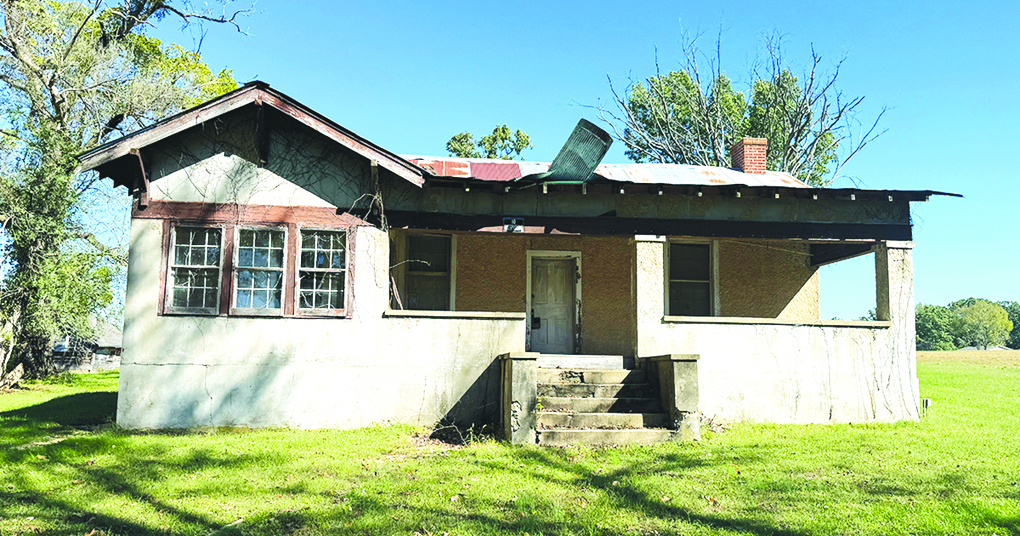
Repair work approved for Houston’s historic Tweed House
The Houston City Council approved repairs Monday for a historic landmark and will seek public input about the future use of the residence.
The Tweed House needs work, and Mayor Sam Kelley asked for the council’s permission to address the problem as it seeks to address other eyesores in the community. “The reasoning behind this is I want us to be the first to police ourselves before someone that has been getting a letter on a nuisance building decides to do it for us,” Kelly told the council. Kelly offered his observations following a recent inspection: The home is not secure, the roof needs attention and there are signs that trespassers had gained entry to the house that dates to the Civil War. New doors are needed on the house and an outbuilding to the north.
The council approved the work, and will later seek public input on what residents would like to see for the property — A renovation or demolition.

ABOUT THE HOUSE
The house, situated on Airport Road, served for many years as the county court. Meals were cooked and many people’s stay extended to overnight. A nearby spring — still in existence — furnished water for the house and for the tannery that David Lynch operated for many years.
During the early part of the Civil War, bushwhackers attempted to steal some of Lynch’s hides, so he buried them and his tools and fled with his family to Macon County in north-central Missouri in the fall of 1862.
During the family’s absence, bushwhackers tried to burn the brick house, but it burned itself out. The Lynchs and Tweeds left the burn marks as a landmark.
In spring 1866, Lynch returned with his family and lived there until 1906, when he died at age 87.
RESTORATION WORK
In 2017, the Lynch-Tweed Civil War Home Preservation Society received not-for-profit status to obtain grants and receive tax-deductible donations to restore the home. The group had hoped to develop a plan to restore the structure and develop a curriculum to teach students about the era. It spearheaded the effort to place a new metal roof on the house.
In October 2017, the City of Houston signed a memo of understanding for the group to seek placement on the National Register of Historic Places.